This video provides a clear and accessible introduction to the production and preservation of farmer-managed seeds. It explains the principles of pollination, varietal purity, and the risks associated with hybrids and GMOs. You will discover practical methods for producing, selecting and storing your own seeds. A valuable educational tool to strengthen seed autonomy and cultivated biodiversity.


Understanding, Preserving and Sharing Quality Farmer-Managed Seeds

This video offers a clear and accessible introduction to the fundamental principles of producing and conserving farmer-managed seeds, within an agroecological and food sovereignty approach.

Producing your own seeds is an essential practice to preserve cultivated biodiversity, strengthen local food sovereignty, and enable farmers and gardeners to maintain varieties adapted to their environments.

Through this educational video, several key concepts are explored:

Pollination

Understand how plant fertilisation occurs and the role of pollinating insects in the formation of seeds and fruits. This stage is crucial for producing viable, reproducible seeds.

Varietal Purity

The video explains the difference between botanical family, species and variety, and highlights the challenges related to cross-pollination between varieties of the same species. Without proper isolation, harvested seeds may lose their original characteristics.

The Limits of F1 Hybrids and GMOs

Seeds from hybrid or genetically modified plants do not guarantee stable traits or faithful reproduction from one generation to the next. Their use can undermine seed autonomy and the sustainability of farmer-led agricultural systems.

Good Practices for High-Quality Seed Production

The video presents practical and accessible principles, including:

  • selecting open-pollinated seeds
  • organising a collective nursery
  • appointing a seed guardian
  • carefully identifying seed batches
  • ensuring proper storage conditions (temperature, humidity, light)

Seed Production in Greenhouses

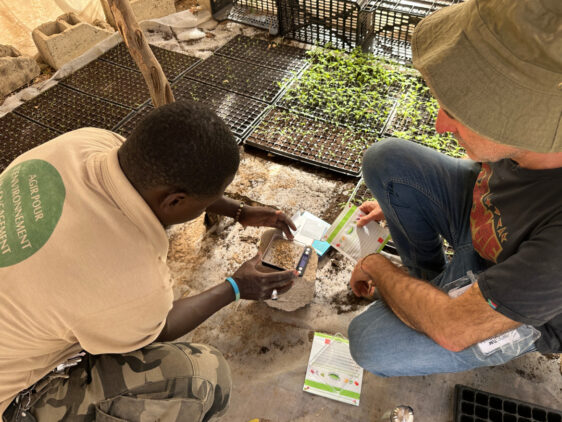
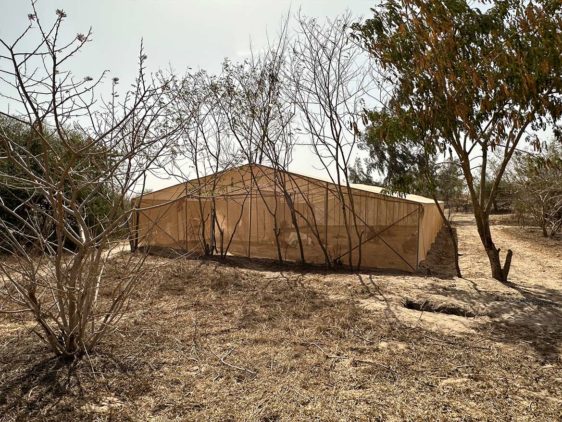
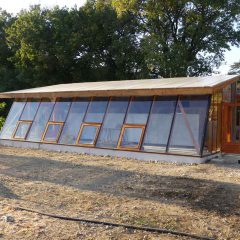
The video shows how a greenhouse equipped with insect-proof nets can help control cross-pollination, organise a dedicated seed production space, and integrate this practice into a broader agroecological approach.

This resource is intended for individuals and groups wishing to develop seed autonomy, share sustainable agricultural knowledge, and strengthen farming practices that respect living ecosystems.

  • Learn more below about seed production in field projects:

A tour of the Sandiara seed greenhouse

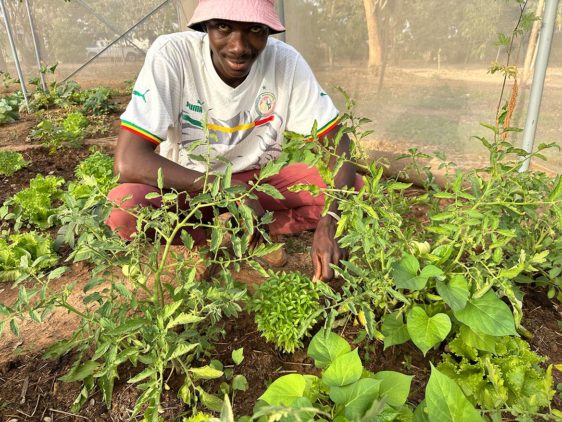
In Sandiara, the seed greenhouse bears witness to a particularly successful season. Led by Nicolas Sarr, who is in charge of production, the tour offers an insight into the diversity and vitality of the crops on display. As we move … Read More

Harvesting Cucumber Seeds

Producing your own seeds is a key step towards greater self-sufficiency in the garden.Accessible to everyone, this practice not only helps reduce costs but also preserves varieties that are well adapted to local growing conditions. In this video, we guide … Read More

Precision scales for seed harvests

To improve the organisation and distribution of locally produced seeds, a precision scale has been made available to the various seed projects. This tool will make it easier to weigh harvests and prepare batches for storage or distribution. This equipment … Read More

Harvesting calendula (marigold) seeds at the seed farm in Sandiara, Senegal

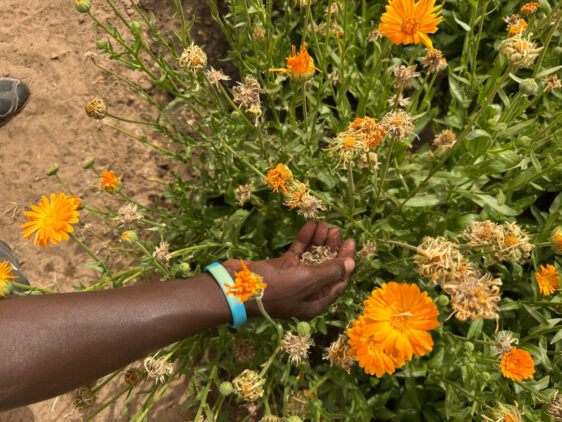
At the APAF seed farm in Sandiara, the greenhouse set up with support from The Ivory Foundation is brimming with seeds this season. Among the plants grown and propagated on the farm is the marigold (calendula). This hardy and easy-to-grow … Read More

Storing seeds in new, specially designed bags

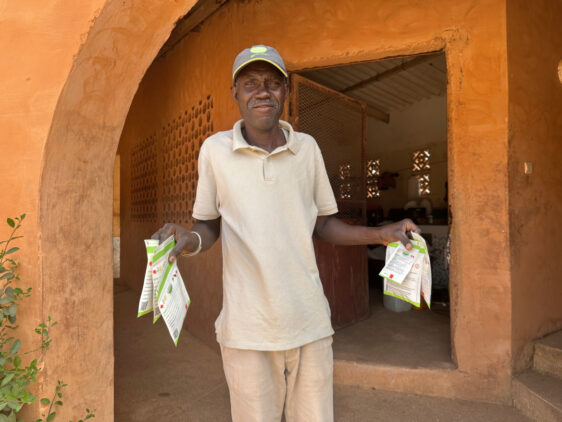
To improve seed storage conditions, The Ivory Foundation has designed resealable bags, available in three sizes, which are now being made available to seed production projects supported in West and Southern Africa. At the Association Village Pilote, Blaise, head of … Read More

First seed harvests in the Village Pilote greenhouse

As part of its commitment to agro-ecology, The Ivory Foundation has installed a greenhouse at the Village Pilote association in Senegal. The aim of the project is to produce local seeds and a large quantity of vegetables to make the … Read More

Start-up of seed production in Popenguine, Senegal

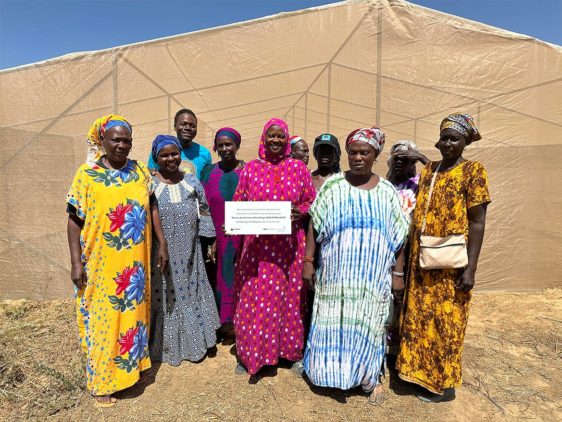
On the occasion of the start-up of the seed production activity in the greenhouse of the market gardening perimeter of the Femmes-Maraîchage AND DIMBALANTE network in Popenguine, The Ivory Foundation team was able to redefine the project’s objectives with the … Read More

Seed production in Dawady, Senegal

The Dawady greenhouse, dedicated to seed production, has been in operation since its installation in early 2024 by The Ivory Foundation. Malik and Abdourahmane, who manage the Dawady market garden perimeter, have taken on board the objectives of the program … Read More

Market garden and seed production project at Village Pilote, Senegal

In 2024, The Ivory Foundation added Village Pilote to its seed production program in Senegal by installing a 200 m² greenhouse dedicated to the production of reproducible peasant seeds. The aim is to support young people in vulnerable situations by … Read More

Bala farm, Senegal

The “wintering” period is not the most favorable for seed production, with its heavy rains favoring the development of diseases such as mildew.Abdhouramane, the man in charge of the Bala garden, has nevertheless maintained a varied production during this period, … Read More

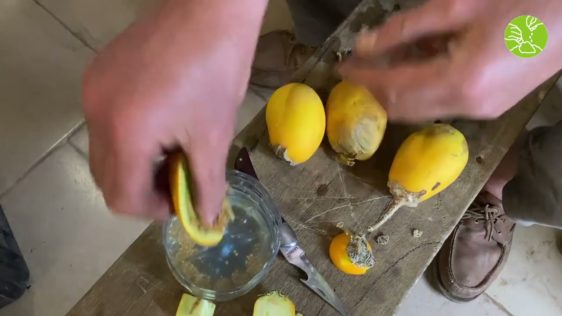
Harvesting aubergine seeds

Cyriaque Crosnier Mangeat, manager of organic seed producer Agrosemens, advises on the Dawady seed project in Senegal. Harvesting methods: You need to select healthy fruit that has reached the ripening stage of the seed carrier (a stage further advanced than … Read More