
Sometimes referred to as ‘fine herbs’, aromatic plants include edible plants with fragrant leaves and flowers that enhance the flavour of dishes. Some of them are also used in beneficial herbal teas (lime blossom, verbena, thyme, rosemary, etc.).

Biodiversity is the contraction of the words “biological” and “diversity”. This means the diversity of all living beings on our planet.

Diversity exists on several levels:

– Diversity of species, among animals or plants. For example: the diversity of cow breeds, or the diversity of tomatoes or carrots, which can be of different shapes, sizes and colors.

– Within each species, there is also diversity, which is called genetic diversity. This explains why a white cow will have a spot on its body, and another will not, or that two carrots of the same species will not have the same shape or size.

– On the planet’s scale, there are also different living environments called ecosystems. This is why oceans, forests or deserts do not have the same plant or animal populations.

Biodiversity plays a key role in alternative farming techniques. Insects, small mammals and amphibians can easily get rid of certain garden pests and play a role in flower pollination or seed dispersal. Some flowers have properties that can be used by the gardeners, such as biopesticides preparations, and livestock can take care of certain tasks, such as weeding. Encouraging biodiversity by offering various shelters to nature dwellers can be very rewarding.


Biodiversity in the vegetable garden : the garden of fragrant, aromatic and medicinal plants.

Cultivated since the 7th century in medieval gardens, these plants are used for their aromas, fragrance or medicinal properties. In the Middle Ages, they were known as ‘simples’. These are plants that are used either dried or fresh and have medicinal properties depending on the parts selected (leaves, stems, flowers, seeds, roots).

Perfume plants are mainly cultivated for use in perfumery (absolutes, concretes, essential oils, floral water, etc.), cosmetics (essential oils and oral water) and food (floral water). Their essence does not always diffuse naturally and may require certain preparations. The extracted essences come from the leaves, stems, roots, flowers or bulbs.

Here is an example of an assortment for the vegetable garden :

Food use:
Absinthe, Annual mugwort, Artemisia vulgaris, Common mugwort, Angelica archangelica, Borage, Nasturtium, Chrysanthemum, Common fennel & bronze fennel, Hibiscus sabdarifa, Lemon balm, Bergamot mint, Spearmint, Mertensia, Fistulous monarda, Turkish oregano, Cretan oregano, Purple perilla “Shiso”, Sweet pea, Liquorice, Rhubarb, Rosemary, Grey Santolina, Green Santolina, Blackcurrant Sage, Mexican Tagetes, Thyme.

Perfume plants:
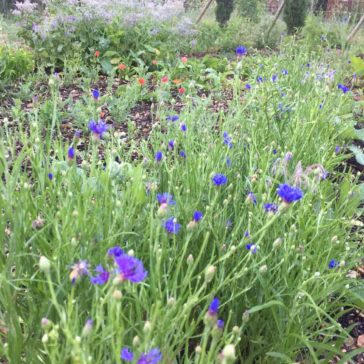
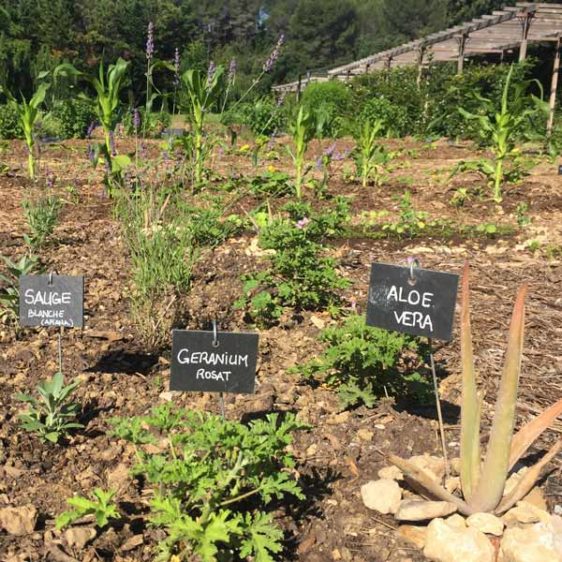
Cornflower, Roman Chamomile, Rose Geranium, Fine Lavender, Lavandin.

Other plants:
Roheras Poppy, Russian Comfrey, Cornflower.

Medicinal use:
Yarrow, aloe vera, pink poppy, comfrey, purple coneflower, escholtzia, marshmallow, mallow, St. John’s wort, nettle, evening primrose, wild pansy, white sage, clary sage, sage, marigold, common tansy, valerian.
  • Below are a number of posts about companinon planting!

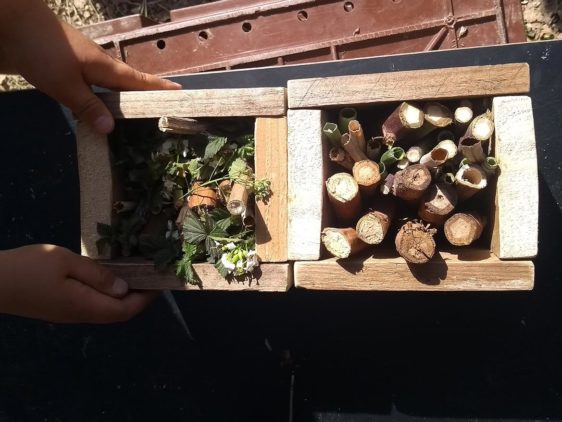
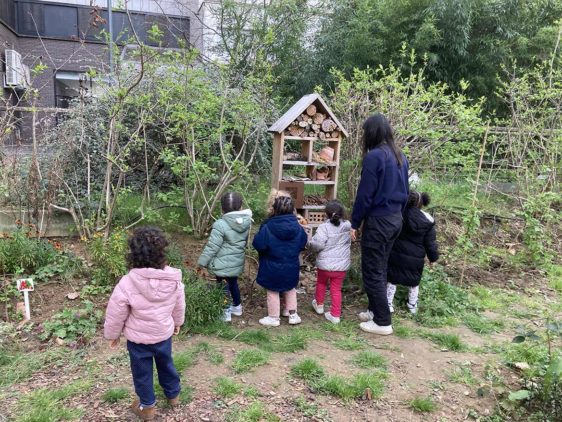
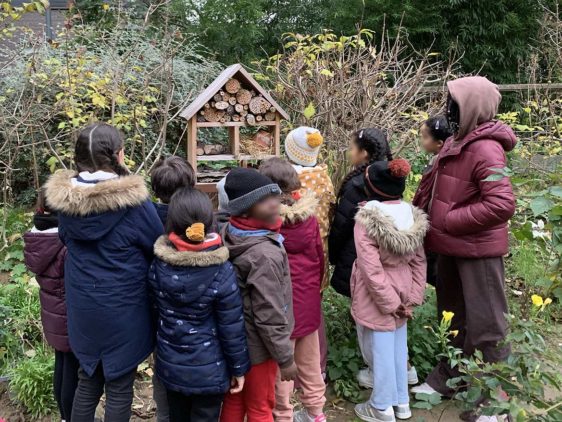
Presentation of the insect hotel to the crèche children

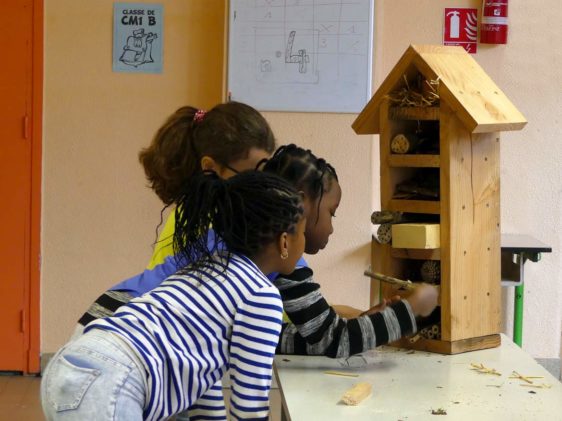
Children from the Villiot crèche discover the insect hotel in the traversine garden. The activity leader explains the role of each compartment adapted to a particular type of insect.

Workshop on the installation of the insect hotel with the children of the CLAJE in the garden of Traversine-Villiot, Paris

With the children welcomed by the Centre Paris Anim’ (CLAJE), the team of Dessine l’Espoir finalised the installation of the insect hotel in the garden of Traversine-Villiot.  We installed pieces of broken bricks for the staphylinid, pine cones for the … Read More

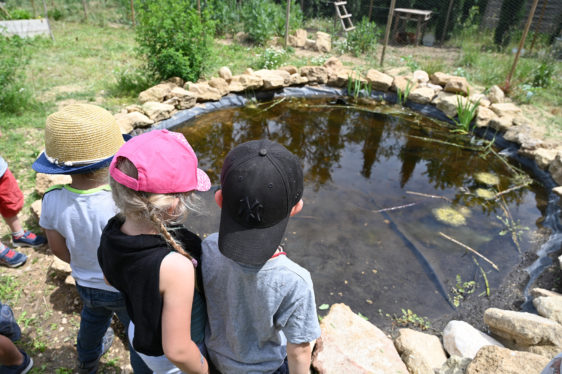
Discovery of the biodiversity around the Grand Potager’s pond

During their visit to the Grand Potager, the students of the Lauris school paid a visit to observe the pond which is located next to the henhouse, so as to learn many things about the biodiversity that can be found … Read More

Nasturtiums are blooming after a winter in the greenhouse at the Grand Potager, Lauris, France

The nasturtiums spent the winter in the warmth of the bioclimatic greenhouse of the Grand Potager. Here they are in full bloom, declining several shades of yellow and orange… Pleasure for the eyes and for the palate, as these flowers … Read More

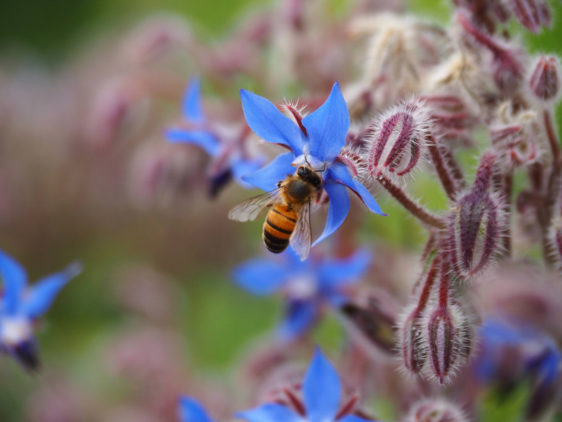
Bee watching at the Grand Potager, Lubéron, France

At the Fontenille domain, the garden is a shelter for many insects: on his own, the garden attracts a huge number of auxiliary insects. Today, as the fist flowers arrived, the children observed bees foraging the garden’s flowers.

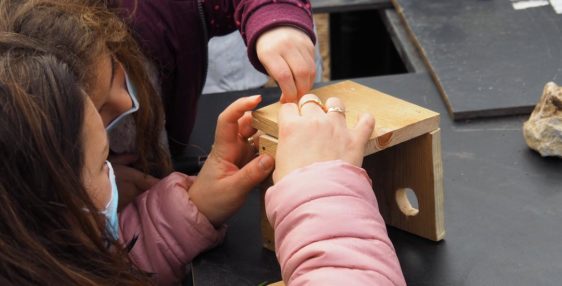
Insect house making workshop in Lauris, France

Every wednesday at the Grand Potager in Fontenille children are offered a creative workshop. This week an insect house making workshop took place, which was an opportunity to children and their parents around a do-it-yourself activity under the sun ! … Read More

Construction of a pond at the Grand Potager de Fontenille

A pond has been built by the animation team of the Grand Potager. A new feature of the garden, it is a real refuge for biodiversity: dragonflies, toads, frogs, newts, birds, beetles, etc. These animals will be all the more … Read More

Manufacture of bird boxes at the Grand Potager !!

It’s time to install bird boxes in your garden or on the wall of your house if you haven’t already done so! With urbanisation and intensive agriculture, natural nesting boxes (cracks in walls, dead trees, hedges…) are becoming less and … Read More

Some news about the herbal spiral of the Grand Potager

At the Grand Potager of Lauris, the Mediterranean climate is favourable to the cultivation of aromatic plants. This is why a spiral of aromatic herbs was developed in the spring of 2019. And it is developing wonderfully well!  This structure, … Read More

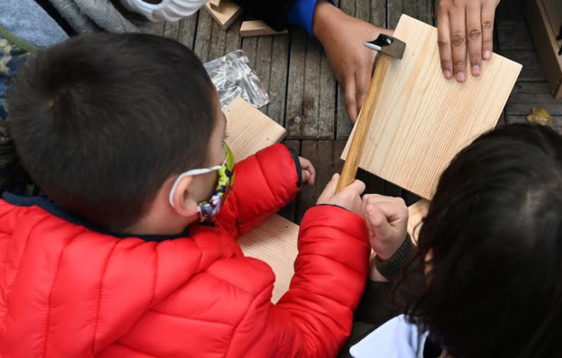
Construction of bird boxes

In order to welcome even more birds in the garden, new nesting boxes had to be built. So the children got involved: one nail here, another there and here are two brand new houses for our friends the birds! Our … Read More

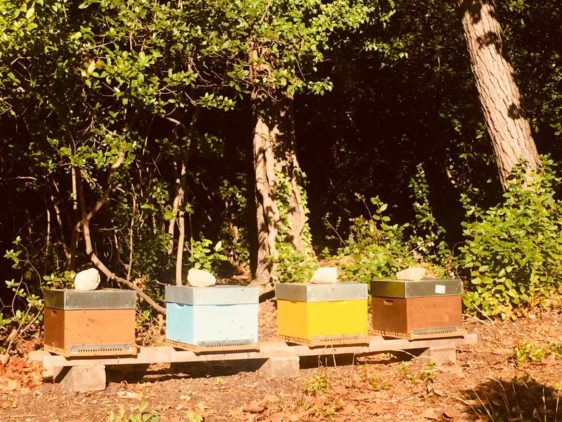
The bee hives of the Grand Potager

Several hives have been installed in collaboration with a local beekeeper on the Grand Potager de Fontenille. They have been placed on the edge of the wood. They are an asset for biodiversity and pollination in the garden.

Garden of fragrant, aromatic and medicinal plants

A garden of fragrant, aromatic and medicinal plants was set up this spring at the Grand Potager. Drawn according to a geometric plan, it gathers plants generally used for their aromas, their perfume or their medicinal properties. Some plants are … Read More

Messicole plants

Literally, messicole means, who lives in the fields. Thus, these plants are biologically adapted to agricultural land, especially cereal crops. They are also called wildflowers, or meadow plants. Considered by modern agriculture as weeds, the development of chemical treatments and … Read More

Association of aromatic plants

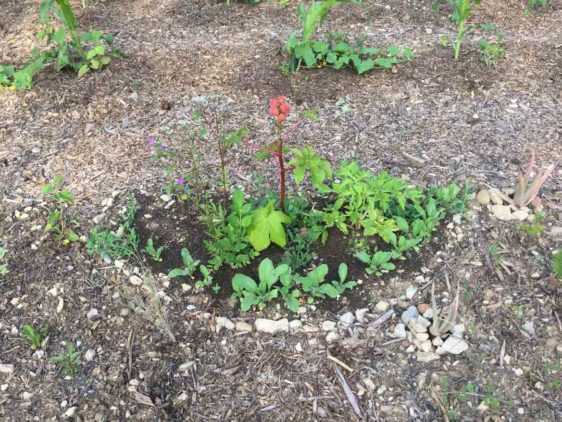
The plants of the perfume, aromatic and medicinal plant garden, are associated in groups of 2 to 4 varieties. In the garden we can find castor, borage and sweet peas grown side by side.  

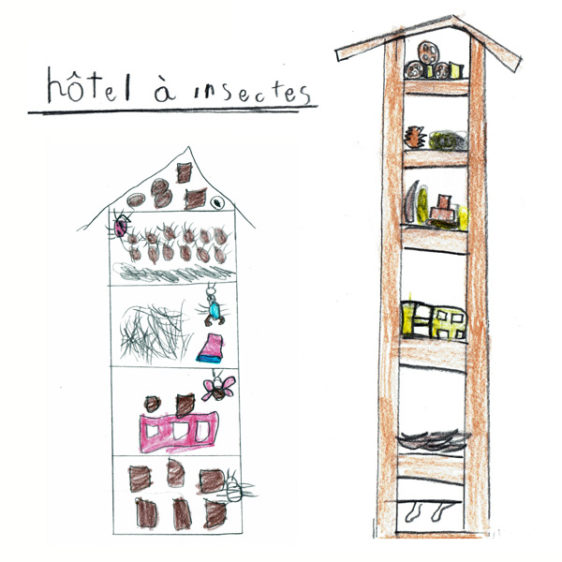
Drawing an hotel shelter

elementary students were invited to draw an insect shelter   EnregistrerEnregistrer

Useful Insects

Designing Hope proposed in class an activity with the children of the elementary around the insects useful to the garden. A presentation of a dozen insects was made, then a questionnaire was given to the children to test their knowledge. … Read More

Insect shelter

The insect shelter aims at attracting beneficial insects to the garden. La Traversine now has 3 insect shelters: 1 on the terrace, one in the preschool court yard, and one in the elementary courtyard. EnregistrerEnregistrer

A garden of fragrant, aromatic and medicinal plants at the Grand Potager

Used for their aroma, culinary taste or medicinal properties, these plants have been cultivated since the Middle Ages. Perfume plants are mainly grown for use in perfumery and cosmetics. Their essence does not always diffuse naturally, and may require some … Read More