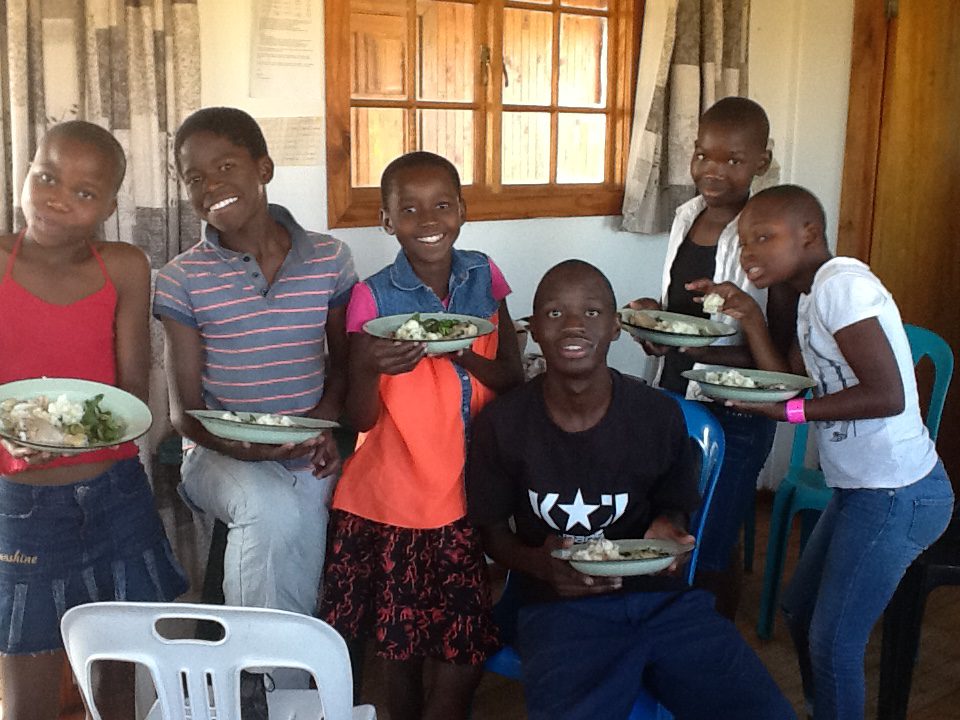
Harvesting vegetables for the children meals
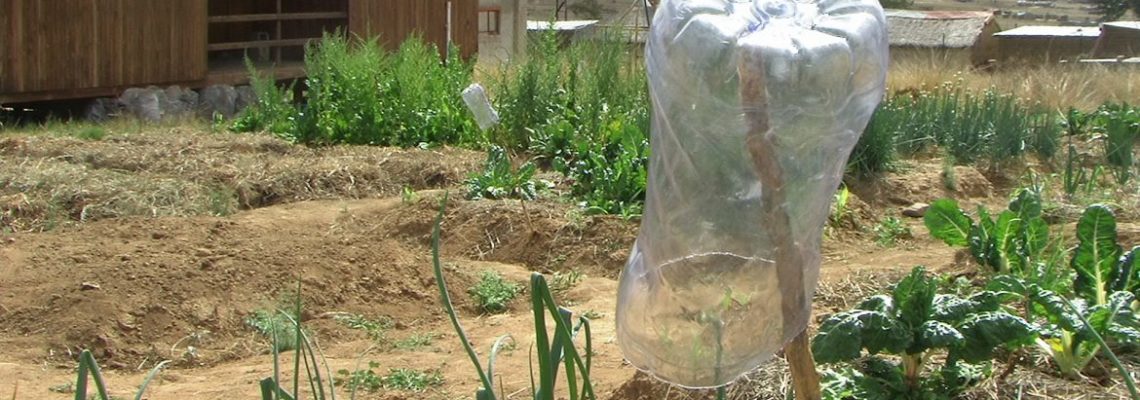
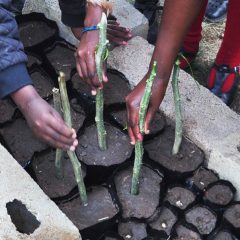
Children can enjoy every day a hot meal that uses some fresh vegetables they grow in the pilot garden.
In South Africa, permaculture was introduced several years ago as a development solution especially for townships, with the notion of “Door Gardens.” These gardens, the size of a door (2m x 1m), are adapted to suburban housing from townships, which often have a small fenced plot of a few square meters.
the idea is to create on that small surface a fertile land, using household waste mixed with plants available nearby (leaves, branches, grass …) and to associate crops for maximum performance on a small surface to provide a dietary supplement with fresh vegetables for families throughout the year.
Designing Hope supports the Silethithemba Halfway House since 2007 in Rosboom, one of the most disadvantaged suburb of Ladysmith District, in Kwazulu Natal.
Since 2011, Permaculture raised beds have been implemented in a pedagogical garden in this center.
Children can enjoy every day a hot meal that uses some fresh vegetables they grow in the pilot garden.
Roosboom has been depending for years on a large tank of communal water, randomly refilled. This has led often to shortage of water, challenging the garden, specially during dry season. Designing Hope invested in a piping system to bring water from … Read More
The children of Roosboom work together and create new raised beds.
Children from Roosboom showing their milpa plot, combining maize, squash and beans.
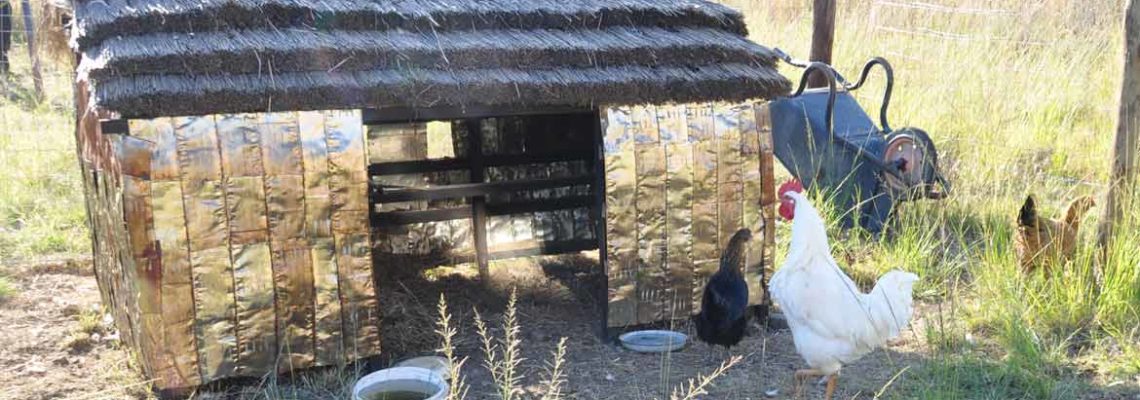
Canned red beans are used for the daily meals cooked to the children of Roosboom. The children were asked to retrieve the empty boxes, flatten them to form a recovery material to make the walls of a henhouse. Women then … Read More
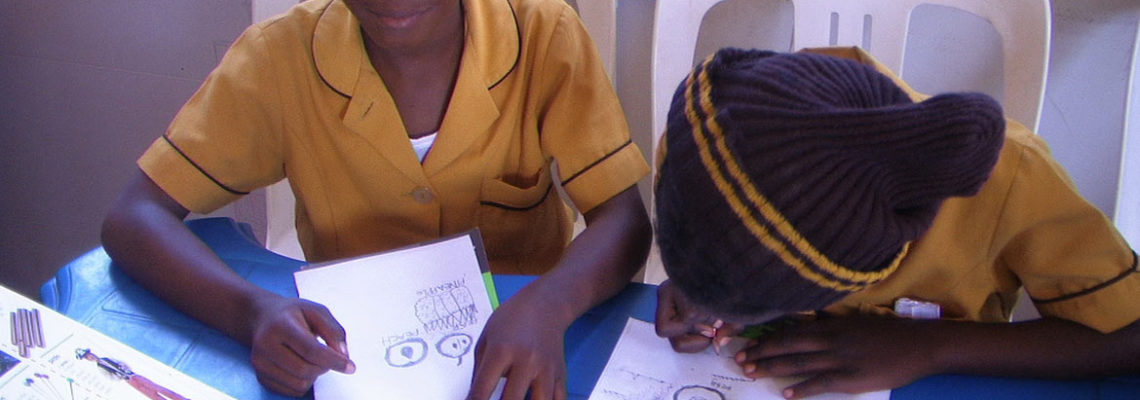
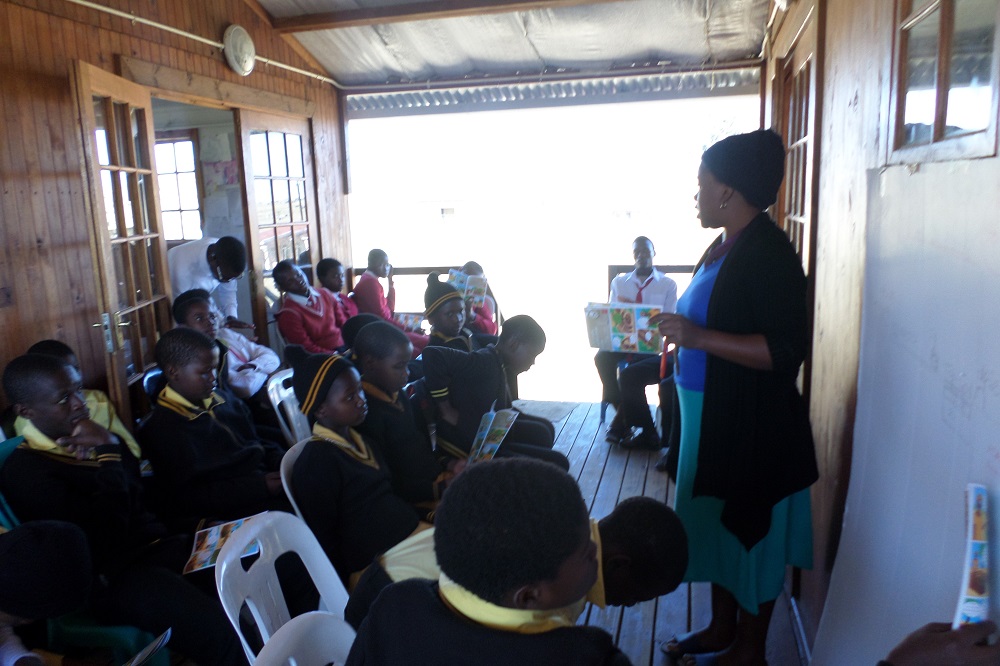
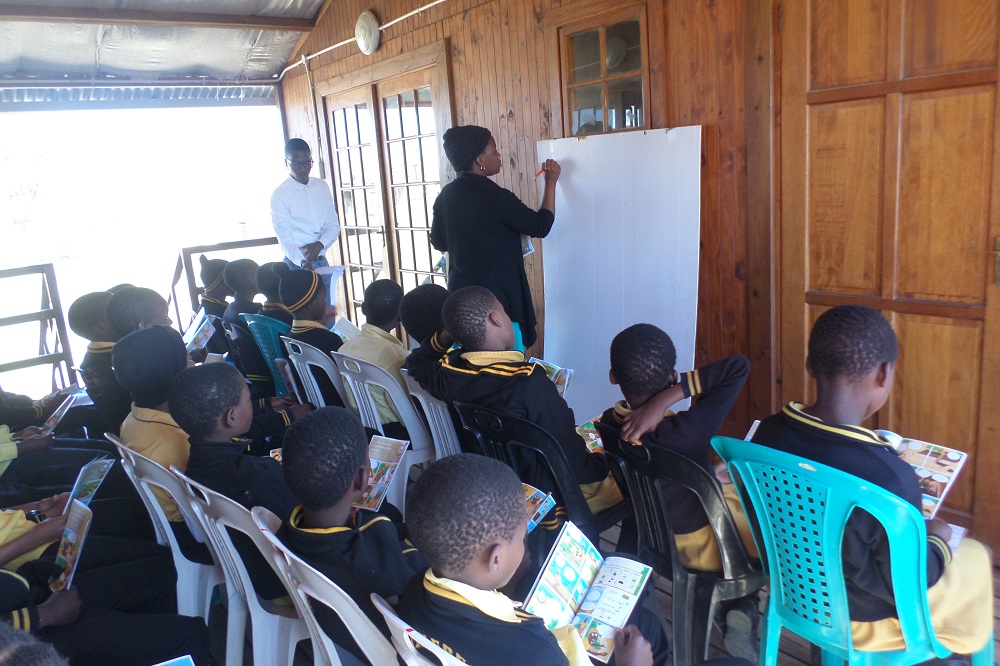
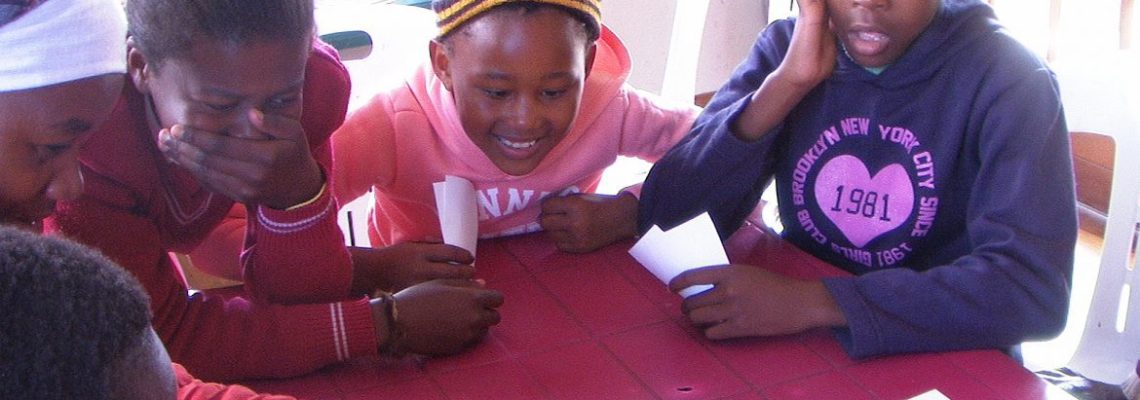
During the few hours they spend daily at the Roosboom halfway House, the children work in groups in the garden and are in charge of its maintenance. During the winter season, crops are limited, and cabbage is the plant that … Read More