



Transgardens is a platform dedicated to educational and experimental gardens, supported by the association Designing Hope and The Ivory Foundation. Since its creation in 2013, it has been networking projects in France and Africa, aiming to raise young people’s awareness of the challenges of sustainable agriculture and foster intercultural exchanges.
To date, Transgardens brings together initiatives in six countries: Eswatini, Lesotho, South Africa, Senegal, Burkina Faso and France. These spaces are designed to be places of training, experimentation and sharing around agroecology, permaculture and agroforestry. They enable children, teachers and local communities to acquire practical, sustainable skills in vegetable and seed production, as well as knowledge about nutrition.
Each garden has a specific vocation: raising awareness of agricultural trades among deaf and hard-of-hearing young people in Lesotho, providing balanced meals for underprivileged children in a South African township and HIV-positive patients in a hospital in Eswatini, enabling isolated villages in Senegal to have access to vegetables all year round, developing a vegetable garden in an inclusive school in Rufisque (Senegal), or providing a green living environment for children in the Villiot district of Paris, and raising awareness of gardening among children at the Bercy school.
These projects are also pedagogical supports for exchanges between pupils from countries in the North and South, strengthening human links and mutual understanding.
Transgardens is a crossroads of knowledge, experience and solidarity in the field of agroecology, serving communities and children in extremely diverse contexts.
Pedagogical games
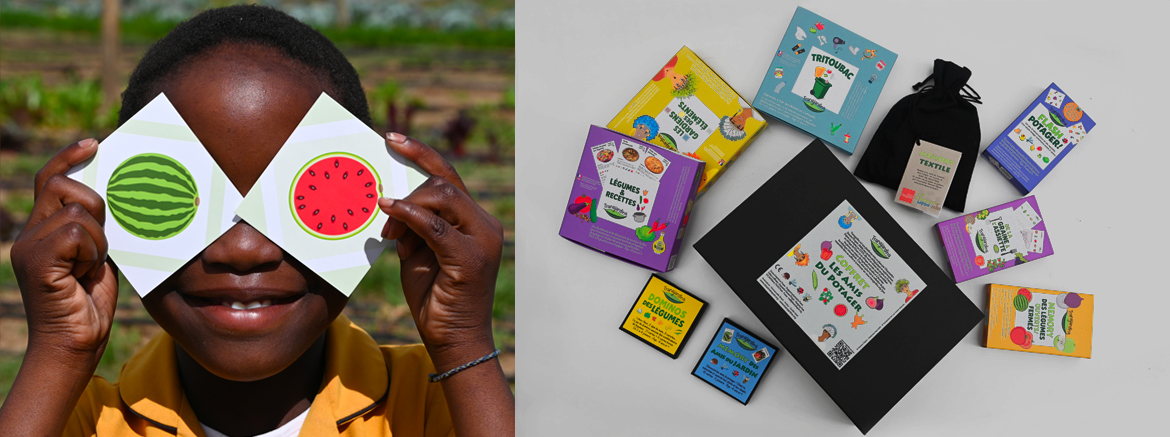
Transgardens is proud to introduce the “Coffret des Amis du Potager” (Friends of the Vegetable Garden Box Set). It brings together nine original games designed by the association Designing Hope, all of which are also available individually. This box set aims to raise young children’s awareness of sustainable agriculture, nutrition and biodiversity.
Click here to discover the games collection...
click here to discover the games collection
Overview of the gardens
Garden of Skills, Malanti – Eswatini
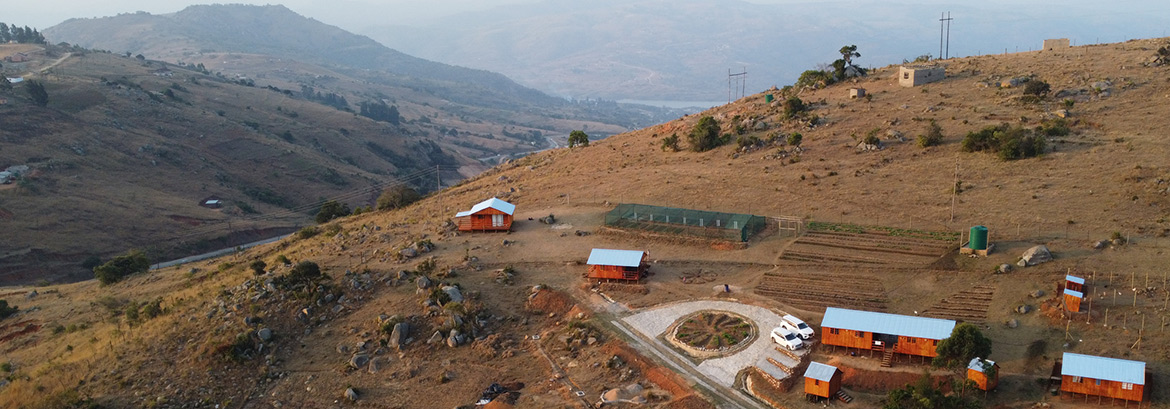
The garden of Malanti is part of the "Garden of Skills" innovative project initiated by Designing Hope in 2020 with the support of Le Bon Marché Rive Gauche.
It consists in associating on one site an agroforestry garden, in the middle of which has been inaugurated an activity and a training centre in the fields of agroecology, agroforestry, craftsmanship, and micro-project management. Click here to learn more about this project.
click here to discover Malanti garden
Rufisque Garden – Senegal
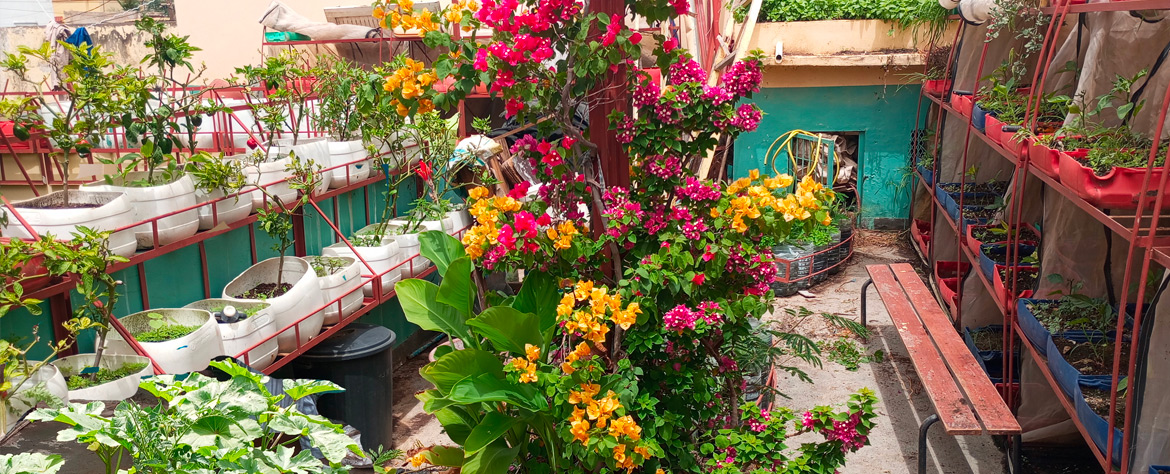
Designing Hope used its experience in creating an educational vegetable garden to help the inclusive school Petits Princes d'Handiscole, located in Rufisque, on the outskirts of Dakar, in the creation of a vegetable garden on its 60m2 roof terrace.
Click here to find out more about this garden.
Click here to discover RUFISQUE garden
Roosboom Garden – South Africa
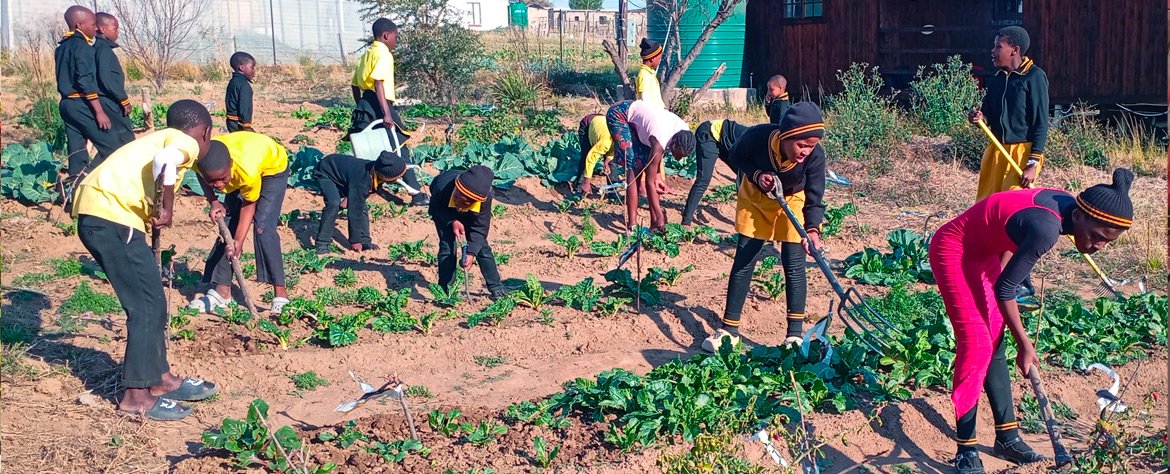
The Roosboom garden is part of a day care centre for underprivileged children supported by Designing Hope since 2007. The children are welcomed after school and receive a daily hot meal. The maintenance of the garden involves the children, and participates in the preparation of the meals.
Click here to find out more about this garden.
Levi’s Nek pedagogical farm – Lesotho
The educational farm of Farming our Future in Levi's Nek  is a structure welcoming deaf and hard of hearing students trained in agroecology, to help them to start up independently and become self-sufficient.
Click here to know more about this garden.
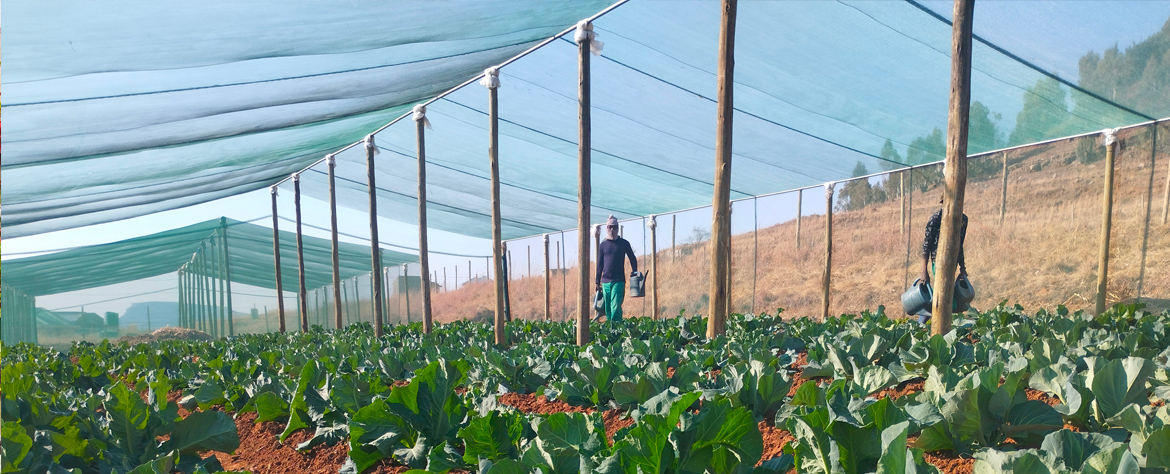
CLICK HERE TO DISCOVER LEVI’S NEK FARM
School farm of St Paul School for the Deaf – Lesotho
St Paul's School is located in Leribe, northern Lesotho, and brings together 200 children aged 5 to 14, deaf and dumb, from rural areas and very disadvantaged backgrounds. The educational farm was set up with the support of The Ivory Foundation in 2015, in order to develop professional opportunities for out-of-school youth.
Click here to know more about this garden.
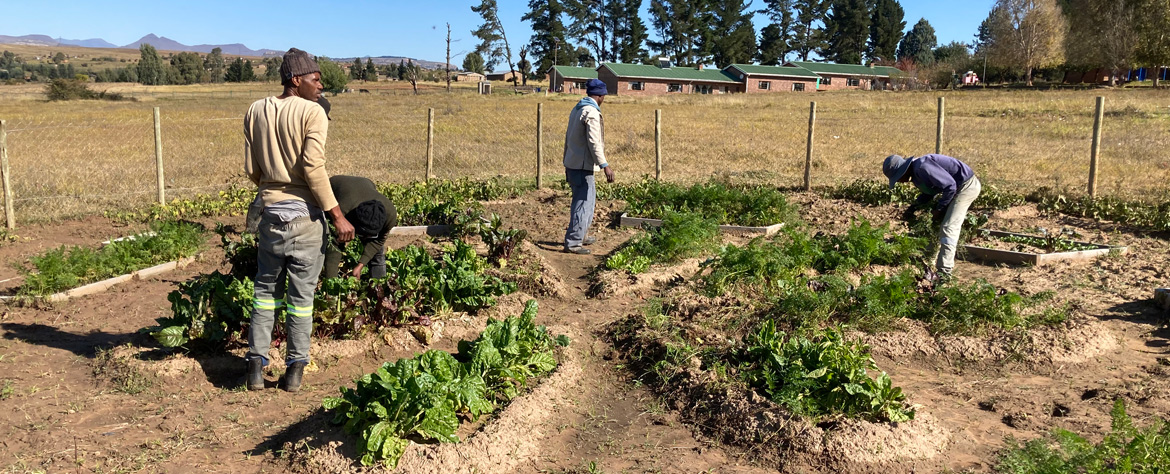
CLICK HERE TO DISCOVER ST PAUL SCHOOL GARDEN
La Traversine Garden – France
La Traversine is an educational garden developed in 2017 on the roof of the Bercy school in the 12th arrondissement in Paris by Desigining Hope as part of the "Parisculteurs", a call for projects launched by the Paris City Council for green roofs, terraces and land in the capital.
Click here to find out more about this garden.
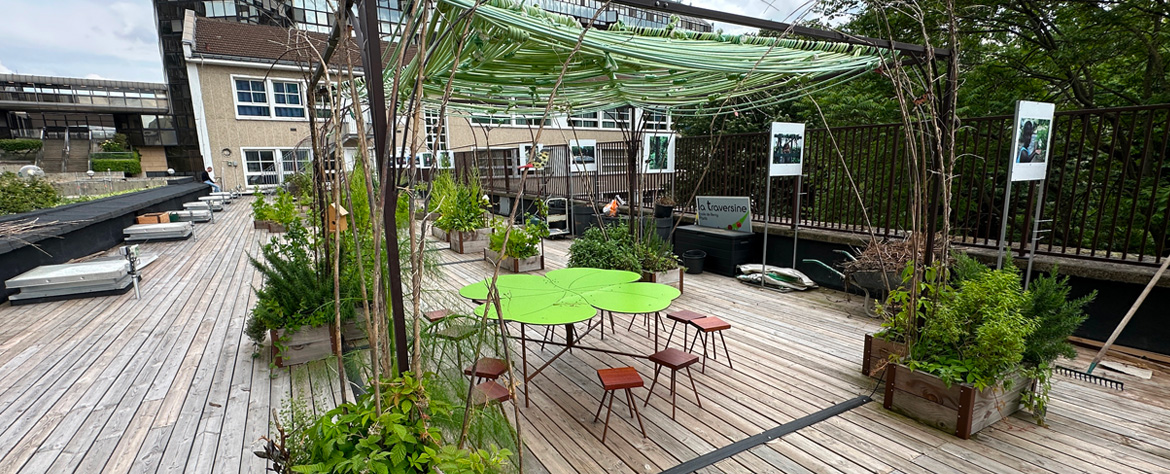
CLICK HERE TO DISCOVER THE GARDEN OF LA TRAVERSINE BERCY
Traversine Villiot garden – France
IIn 2021, Paris Habitat entrusted Designing Hope with the four-year management of the development and activities of a 300 m² green space located in the heart of the Villiot-Rapée residence in eastern Paris. The aim is to turn it into a place where children living in the residence, as well as young visitors from the neighborhood, can enjoy life and discover biodiversity and nature.
Click here to find out more about this garden.

CLICK HERE TO DISCOVER THE GARDEN OF LA TRAVERSINE VILLIOT
Dawady’s school farm, Senegal
The Dawady Farm School was born in 2017, at the initiative of The Ivory Foundation and with the local expertise of Am Be Khoun and the Kaicedrat.
 134 women are involved in its management, and benefit from individual plots to feed their families. Since 2020, this committed work has spread to the neighbouring villages.
 Thus, 5 new market garden areas have been associated with the project.
 Read more about the project
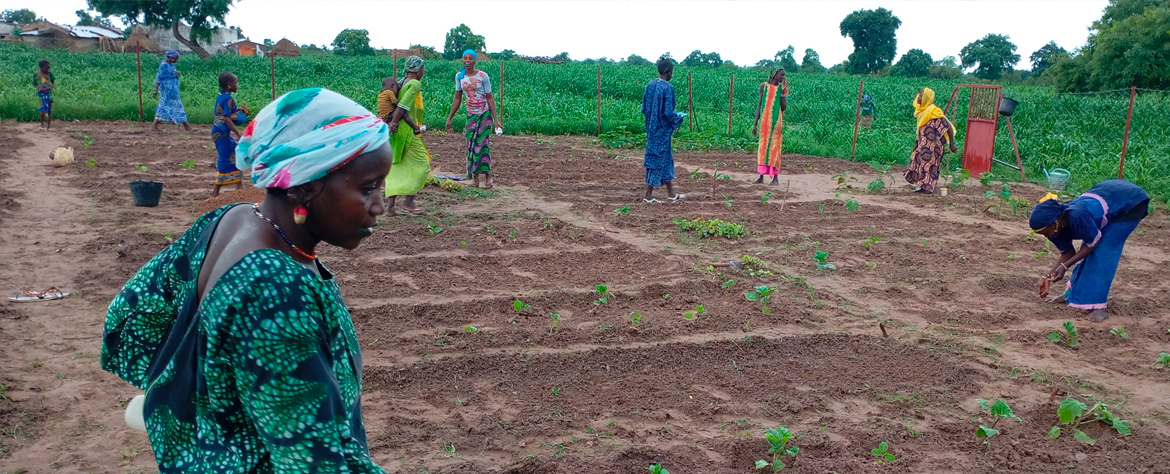
CLICK HERE TO DISCOVER DAWADY’S PEDAGOGICAL FARM
Sandiara seed farm, Mbour – Sénégal
Since 2019, The Ivory Foundation and Agrosemens have been working with APAF Senegal to develop a local production chain for reproducible farm seeds, with support from the Marie-Pierre Crosnier Mangeat Foundation. This project was launched at the Diokhar farm, then in Nobandane, and now in Sandiara, in the Mbour region.
Read more

CLICK HERE TO DISCOVER SANDIARA SEED FARM
Bala, Sénégal
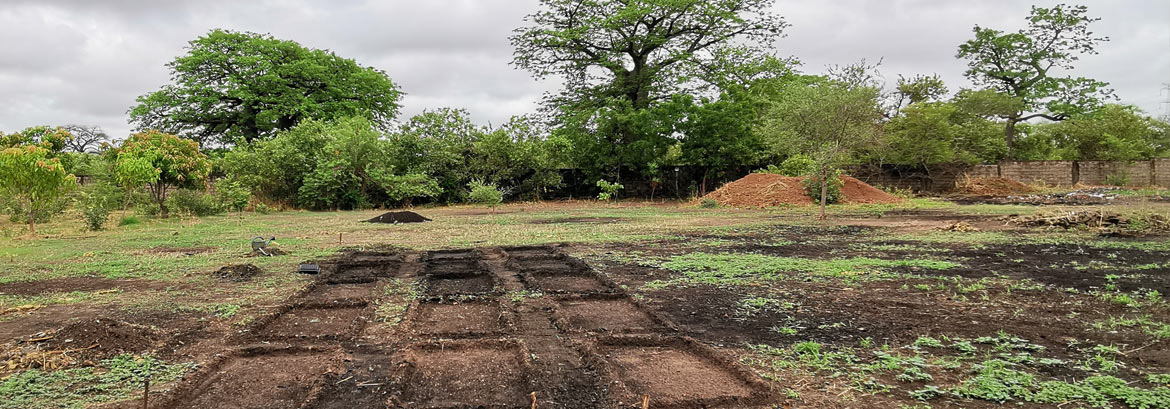
In 2012, the Le Kaicedrat association built a medical center in Bala, one of the most arid and poorest regions of Senegal. A mobile team serves villages located within a radius of 20 to 30 km. With the support of The Ivory Foundation, gardens have been created in these villages, involving women and offering them training in agroecology and agroforestry. To strengthen this initiative, a pilot garden for organic seed production was set up in 2021 within the grounds of the Bala medical center.
Read more about this project
CLICK HERE TO DISCOVER BALA SEED FARM
Yagma Garden – Burkina Faso
A vegetable garden of 4000m2, built on a deserted plot of land around the school of Yagma, in the suburbs of Ouagadoudou. This garden was set up by The Ivory Foundation, with the expertise of APAF, to set up a pilot garden in agroforestry. This garden aims to change the environment of these children, by providing them with a pleasant and green working environment, while raising their awareness of this innovative agricultural approach and providing vegetables for the school canteen.
Find out more about this garden.

CLICK HERE TO DISCOVER YAGMA GARDEN
Le Grand Potager de Fontenille – France
A vegetable garden of 4500m2, laid out on an organic wine-growing estate, in the privileged setting of the Luberon. The Grand Potager welcomes schoolchildren from the surrounding schools to raise their awareness of biodiversity and sustainable agriculture techniques.
Find out more about this garden.

CLICK HERE TO DISCOVER LE GRAND POTAGER DE LAURIS
Transgardens is an initiative of Designing Hope started in 2013, bringing together educational and experimental gardens from several countries in Africa and France. Designing Hope has always promoted family farming in its projects. One of the early project in South Africa aimed at encouraging “Door Gardens”, (family gardens of the size of a door) that can be grown outside the house, even in a township with only little ground around the shacks. Since 2013, Designing Hope has launched a training program to permaculture techniques and agroecology. This knowledge promotes access to nutritionally balanced meals, in a context of physical fragility, poverty and rising food prices, accentuating malnutrition. Reproducible seeds are made available, and training on seed conservation enable families to be self-sufficient over time.

avec le soutien de